If you’re trying to find a web designer, you’ve probably already noticed the problem: there are a lot of options, and most of them sound the same. The fastest way to get to a great result is to focus less on hype and more on proof—work quality, process, and how well a designer understands your business goals.
Here’s a straightforward framework you can use to confidently hire the right partner.
What Do You Need the Website to Do?
Before you compare designers, define success. A great web designer isn’t just making pages—they’re building a tool that supports your business.
- Primary goal: leads, bookings, sales, donations, credibility, recruiting, or something else?
- Key actions: contact form submissions, calls, purchases, email signups, event registrations
- Audience: who it’s for, what questions they have, and what hesitations they need addressed
- Scope: a refreshed site, a full redesign, a new brand + website, or a custom build
This makes it easier to spot designers who ask the right questions—and avoid those who jump straight to visuals without strategy.
What to Look For When You’re Trying to Find a Web Designer
1) Portfolio quality (and variety) you can trust
Look for work that feels polished, clear, and intentional—especially in typography, layout, and mobile responsiveness. Bonus points if the portfolio shows range across industries.
For example:
- Corporate website design for Banyan Ridge Capital Management (clean, confident, professional)
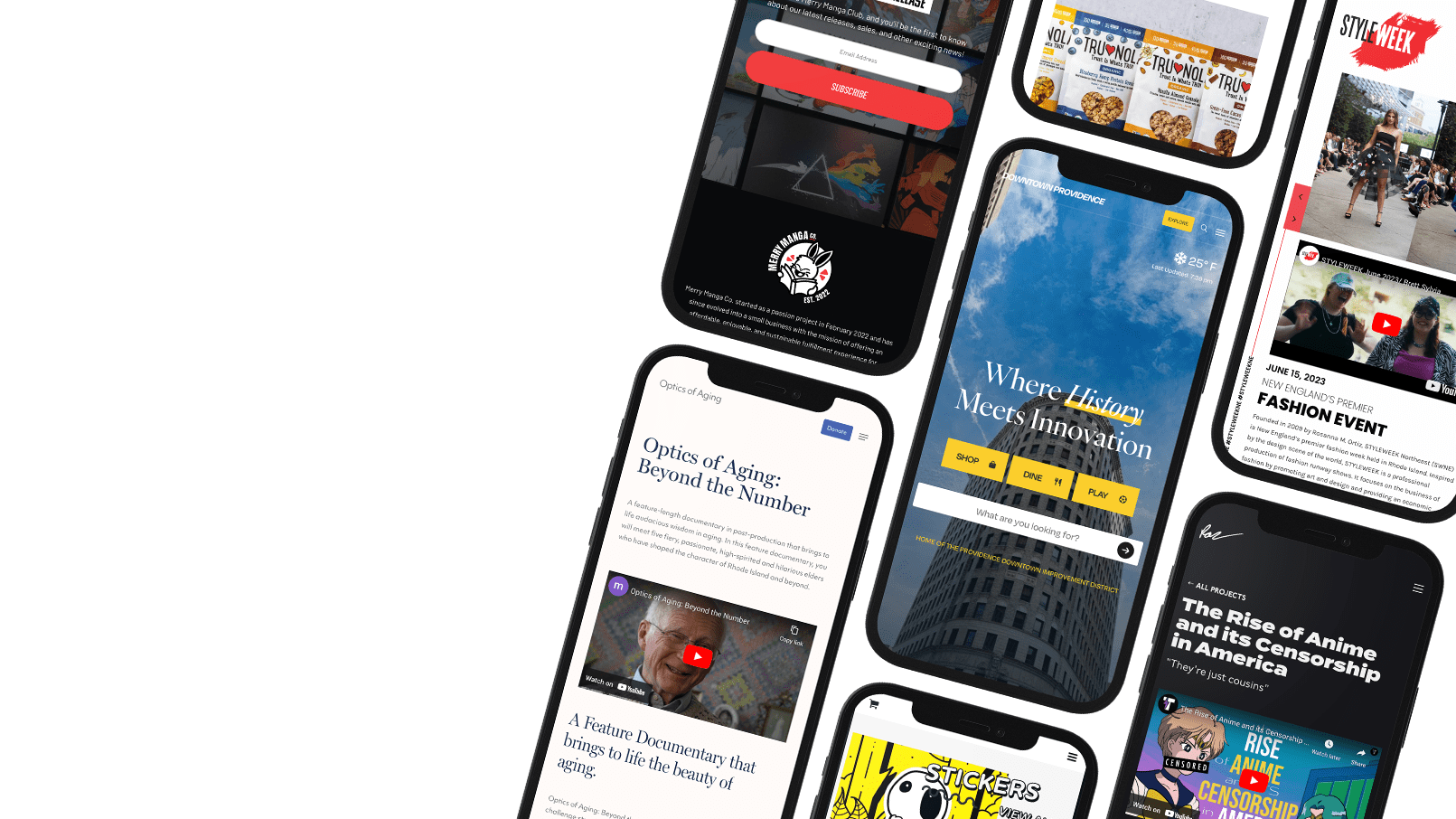
- eCommerce website design for Merry Manga Co (shopping experience, product presentation)
- Custom website design for Downtown Providence (community-focused, content-rich)
When you review a portfolio, ask: Does this work solve problems, or just look nice?
2) A process that reduces risk
When people have a bad web design experience, it’s usually because the process was vague. A strong designer can explain how they move from discovery to design to development—without surprises.
Look for a process that includes:
- Discovery (goals, audiences, competitors, messaging)
- Information architecture (sitemap + user flow)
- Design (wireframes and/or high-fidelity comps)
- Development (CMS setup, performance, accessibility basics)
- Testing + launch (QA, analytics, redirects, training)
3) Writing and content support (or clear expectations)
Design can’t do all the heavy lifting if the content is unclear. When you’re trying to find a web designer, ask how they handle copy, photography, and content migration.
- Will they guide messaging and page structure?
- Do they offer copywriting or editing?
- Can they recommend photography or art direction?
4) Technical competence (even if you’re not technical)
You don’t need to be a developer—but your designer should be able to talk confidently about the basics that impact real-world results:
- Mobile performance and page speed
- SEO fundamentals (clean structure, metadata, redirects, indexability)
- Accessibility (readability, color contrast, keyboard navigation)
- Security and maintainability
If answers feel hand-wavy, keep looking.
Questions to Ask Before You Hire
These questions quickly reveal experience level, communication style, and whether the designer is a good fit.
- Can you walk me through a recent project from start to finish?
- What do you need from us to stay on schedule?
- How do you handle revisions and feedback?
- Who will I be working with day-to-day?
- What platform will the site be built on, and why?
- What’s included in launch, and what happens after?
Common Red Flags When You Find a Web Designer
- “We can do it all” with no examples, no specializations, and no clear plan
- No discussion of goals—only trends, templates, or “modern design”
- Unclear ownership of domains, hosting, and accounts
- Pricing that’s vague or wildly low without explaining tradeoffs
- No post-launch plan for updates, fixes, and performance
Why “Local” Can Be a Big Advantage
If you’re in New England (or you value real collaboration), working with a studio that’s actually accessible can make the entire project smoother. Local doesn’t just mean geography—it often means clearer communication, better context, and more accountability.
The right web designer should feel like a partner—someone who understands your goals, makes smart recommendations, and sweats the details.
Ready to Find a Web Designer You Can Trust?
Local Robot is an award-winning custom web design and development studio based in Providence, Rhode Island. If you’re looking to find a web designer who combines strategy, custom design, and thoughtful development, we can help. Local Robot builds websites that are as functional as they are beautiful.
Tell us what you’re building—and we’ll recommend the right next step. Contact Local Robot to start the conversation.
